
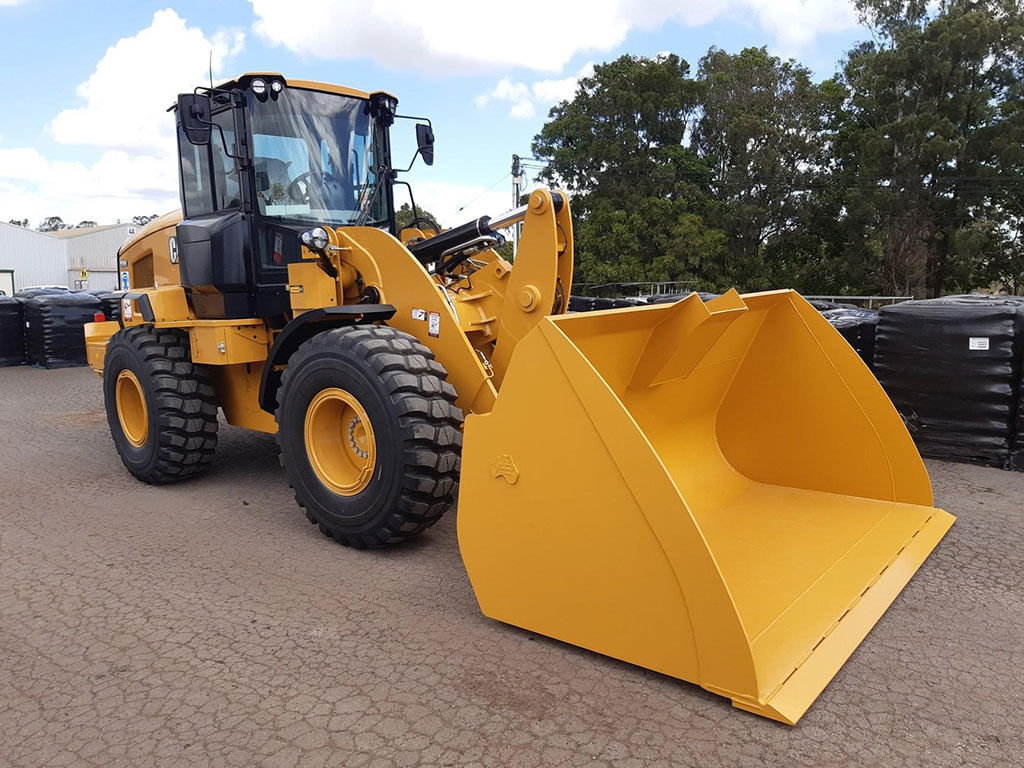
An Atlas custom-designed 5.2m3 light material bucket makes its way to a customer
Atlas is an innovative attachments, metal fabrication and welding business, established in Queensland in 1985 and known for its hallmarks of innovation, quality and service. From one-off custom designed projects, to a global supply agreement to build CAT designed and specified buckets, Atlas products perform consistently across the construction, quarry, demolition, forestry and mining industries it serves.
Atlas Sales and Marketing Manager and outgoing CMEIG State President for Queensland, Andrew Moir, has been in the industry almost 40 years, working for brands including Domino (the original Hitachi distributor), Banbury Engineering and Hastings Deering before joining Atlas 17 years ago.
Andrew is supportive of the move to a single CMEIG national body, sharing “it’s vitally important to have one big national and independent voice with regulators.”
“I’m proud to work for an Australian family owned and run business that boasts an enviable staff turnover of less than one percent across its 65 strong workforce.” The Alzino family owners, who are earthmoving contractors and developers themselves, understand local conditions, the industry and invest in innovation accordingly.
“As much as you may think it’s difficult to innovate a bucket – there’s always things we can do,” Andrew says. “We are currently working on a tilt bucket for excavators that doesn’t require greasing, reducing the costly risk should this task be overlooked. We are also reintroducing a powertilt quick hitch into the Australian market suitable for machine weights from three to 30 tonnes”.
Quality engineering is at the heart of the Atlas brand and their motto “we build to a standard not a price” ensures their products work reliably hour after hour. “There are many cheaper options out there but none of the same quality and good reputation,” Andrew says.
“Just last week a customer shared with me that his Atlas tilt bucket had done approx. 30,000 hours and all he’s had to do to it in that time was replace four to five sets of pins and bushes. This reliability was a major factor in the customer signing up for a new unit.”
Andrew warns that cheap imports are one of the biggest challenges for the industry – not just because of the poor performance of an inferior product but because we need to continue to invest in local production and innovation, so these services are there when we need them.